Lightning Protection for Defence
Lightning protection for defence establishments and facilities is critical to safeguard personnel, equipment, and operations from the destructive effects of lightning strikes. Given the sensitive and critical nature of defence infrastructure and the high-value assets involved, effective lightning protection systems are essential to ensure operational readiness and mitigate risks.
Tailored lightning protection solutions for military and defence
Military installations are at risk from lightning strikes, spanning diverse regions with critical infrastructure vulnerable to their impact. These challenges significantly affect operations, finances, and security. Lightning disruptions can compromise mission readiness, disrupt operations, and reduce efficiency, impacting long-term planning and rapid response capabilities. Our solutions are tailored to mitigate these risks, fortifying assets and operations against lightning's destructive force.
- Facility protection – military installations, including command centers and storage facilities, require robust lightning protection to maintain continuous operations.
- Equipment and electronics – defence operations rely on sophisticated electronic equipment for communication, surveillance, and weaponry.
- Personnel safety – lightning protection prioritises the safety of military personnel in outdoor environments.
- Operational continuity – lightning protection systems are crucial for defence readiness by reducing equipment failures and ensuring uninterrupted operations.
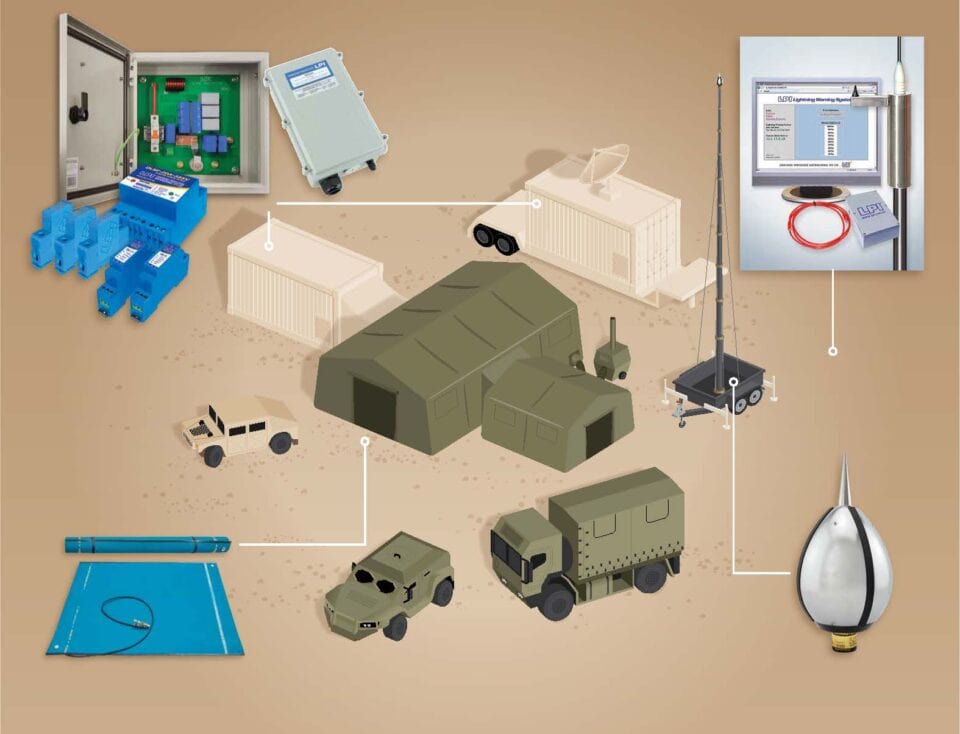
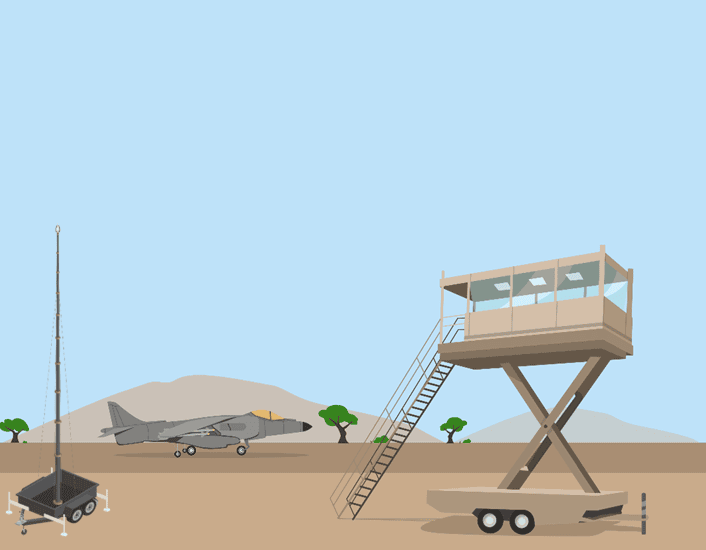
Comprehensive Lightning Protection Approach
LPI recommends a comprehensive approach to lightning protection. This approach is comprised of four key steps: Direct Strike Protection, Surge Protection, Earthing and Bonding, and Personal Protection. Each of these steps plays a crucial role in the overall protection strategy. LPI's four-step approach must be applied holistically to mitigate all types of lightning risks.


 Earthing and Bonding
Provide a low impedance reference earth and bond all conductive elements to minimise voltage differences.